Black comedy, thriller or western, the film works: if you get past the initial ‘freewheeling chat’ of the two extraordinary actors, you are quickly immersed in the action/thriller part, in which all the CIA’s illegal operations and killings are disturbingly suggested
Set in 1973 on the eve of the Chilean coup, Wild Horse Nine follows two ageing CIA operatives—terminally ill Chris (John Malkovich) and his partner Lee (Sam Rockwell)—who are sent on a mysterious mission to Easter Island, where their loyalty to the agency and each other unravels after Chris befriends two rebellious local students.
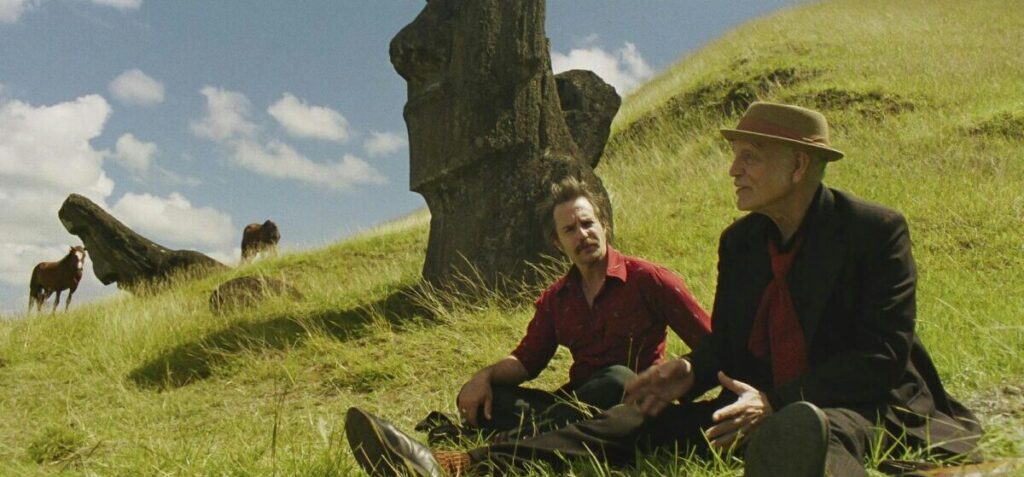
First of all, what does the title mean? When asked, the director showed his signature sarcasm: “I have no idea. I like numbers and I like horses.” All right, but a meaning can be at least guessed once you have seen the film. Wild horses roam freely on the island and are dying Chris’ only ‘friends’; they are an obvious metaphor for the freedom both CIA’s 007- with-licence-to-kill operatives are looking for in the twilight of their lives. In a way, the movie is a crepuscular western, as the two friends/partners are world-weary gunslingers reaching the final frontier, as in Sam Peckinpah’s The Wild Bunch. In the western tradition, the two partners (cowboys or cops) create a bromance, as P. Bradshaw suggests in his review titled McDonagh’s acid bromance. The term is a blend of the words “bro” (brother) and “romance”, a close, affectionate, and non-sexual friendship between two or more men. In fact, the review subtitle reads Two men, some violence, much freewheeling chat: so far, so standard fare from the Oscar-winning writer-director. But this time the comedy and charm can feel diluted by blood and machismo. Back to the title: the number 9 is more problematic; can it be the 9mm handgun at the centre of the plot?
Black comedy, thriller or western, the film works: if you get past the initial ‘freewheeling chat’ of the two extraordinary actors (original language strongly suggested), then you are quickly immersed in the action/thriller part, in which all the CIA’s illegal operations and killings are disturbingly suggested (Chris, in his final carelessness, is dangerously writing his memoirs). And the ghost of JFK’s assassination comes back vividly, a turning point in America’s loss of innocence and its alleged CIA involvement. But Chris, an unconventional and empathic anti-hero, has a final tough redemption act, like his ambiguous partner Lee, as in Peckinpah’s movies.